ASTROLOGY QUESTIONS
Why Do Astrologers Sometimes Disagree?
Astrologers sometimes disagree because astrology is both technical and interpretive. The chart has calculable parts, but the meaning is read through methods, priorities and experience. One astrologer may focus on houses, another on aspects, another on planetary condition, another on timing. They may all be looking at the same chart, but they may emphasize different layers.
WHY READINGS DIFFER
Different methods can emphasize different parts of the same chart.


House systems can change house placement
One of the biggest technical reasons for disagreement is house system. Placidus, Whole Sign, Equal House and other systems divide the chart differently. A planet may fall in one house in one system and another house in a different system, especially if it is close to a cusp.
This can change interpretation. A Venus placement near the border of the fifth and sixth houses may be read as creativity and romance by one astrologer, or daily work and service by another. Both may have reasons depending on their method.
Orbs change which aspects count
An orb is the distance from an exact aspect. Some astrologers use wider orbs, especially for the Sun and Moon. Others use tighter orbs for precision. If one astrologer accepts an eight-degree square and another only accepts five degrees, their aspect list will differ.
This does not mean astrology is random. It means the reader is choosing a threshold for what feels active enough to interpret. Good software should make its method consistent and transparent.
Different traditions use different priorities
Modern psychological astrology may focus on self-awareness, inner patterns and growth. Traditional astrology may focus more on dignity, rulership, sect, condition and concrete topics. Evolutionary astrology may focus on soul themes and development. Relationship astrology may prioritize synastry and composite patterns.
These traditions can produce different language even when they read the same chart. One may describe a Saturn pattern as fear and responsibility. Another may describe it as structure, delay and duty. The meaning overlaps, but the emphasis changes.
Context changes the reading
A chart does not speak in isolation. The same Mars placement can be read differently in a career question, relationship question or health routine question. An astrologer who knows the question may emphasize a different part of the chart than one giving a general reading.
This is why a good reading usually asks what the person wants to understand. Astrology becomes more precise when the chart is connected to a real topic.
Interpretation is a skill
Even when two astrologers use the same settings, they may disagree because interpretation requires judgment. Which aspect is strongest? Which planet rules the chart? Which transit matters most? Which pattern repeats? These are interpretive decisions.
That is similar to other forms of analysis. Two therapists, designers or doctors may notice different details. Disagreement does not automatically mean the field is useless. It means method and clarity matter.
Some disagreement is about language
Two astrologers may be describing the same pattern with different words. One may call a Moon-Saturn aspect emotional restriction. Another may call it emotional responsibility. Another may call it early maturity. These are not always contradictions. They may be different angles on the same symbol.
This is why it helps to listen for the underlying pattern. If several readings point to boundaries, caution, duty and emotional control, the core meaning may be similar even if the wording changes.
Some disagreement is about what matters most
A chart contains more information than one reading can fully cover. The astrologer must decide what is most important. They may prioritize the chart ruler, the Moon, angular planets, tight aspects, current transits or the topic the client asked about.
Different priorities create different readings. This is not always a problem. A career reading and a relationship reading should not sound exactly the same, even if they come from the same natal chart.
How users can compare readings
If two readings disagree, check the basics first: birth data, house system, aspect orbs and whether the reading is natal, transit, synastry or composite. Then look for repeated themes. If both readings mention communication pressure, emotional distance or a need for discipline, that shared theme may be important.
The best reading is not always the most dramatic one. It is the one that explains the chart clearly, respects context and helps the user understand their life without creating confusion.
Disagreement can improve the reading
When handled well, disagreement can make astrology more precise. It encourages the reader to explain the method, name the house system, clarify the orb and separate observation from assumption. That transparency helps the user understand why a conclusion was reached.
How Zodigo reduces confusion
Zodigo keeps chart logic consistent so users are not jumping between random methods without knowing it. The app organizes planets, houses, aspects, transits and compatibility categories in a clear structure.
That makes astrology easier to compare and understand. You can still explore different perspectives, but your personal chart has one organized foundation.
Zodigo reduces confusion by starting from consistent chart calculation: a licensed, high-precision planetary calculation engine calculates the planetary positions before the app turns them into interpretation.
FAQ
Why Do Astrologers Sometimes Disagree? questions
Why do apps show different houses?
They may use different house systems, time zone handling or calculation settings.
Does disagreement mean astrology is fake?
Not necessarily. It often means different methods or interpretive priorities are being used.
Why do astrologers use different house systems?
Different astrology traditions divide the chart in different ways. Placidus, Whole Sign and Equal House can place planets in different houses.
Why do aspect lists differ between astrologers?
Aspect lists depend on orb settings and which planets or points are included. Wider orbs show more aspects, while tighter orbs show fewer.
Inside the Zodigo app
An astrology app powered by high-precision NASA/JPL data
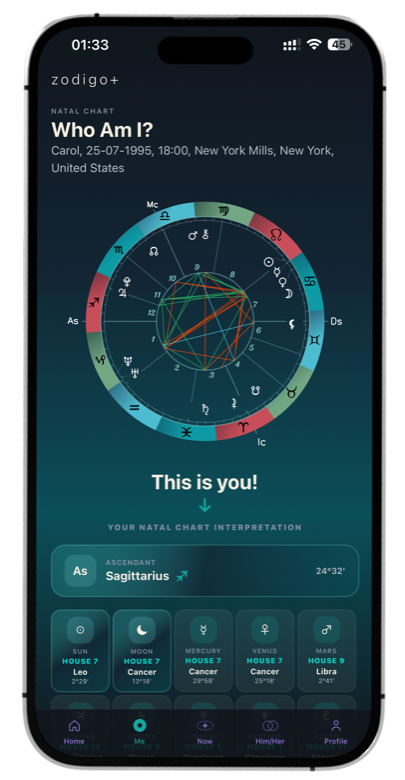
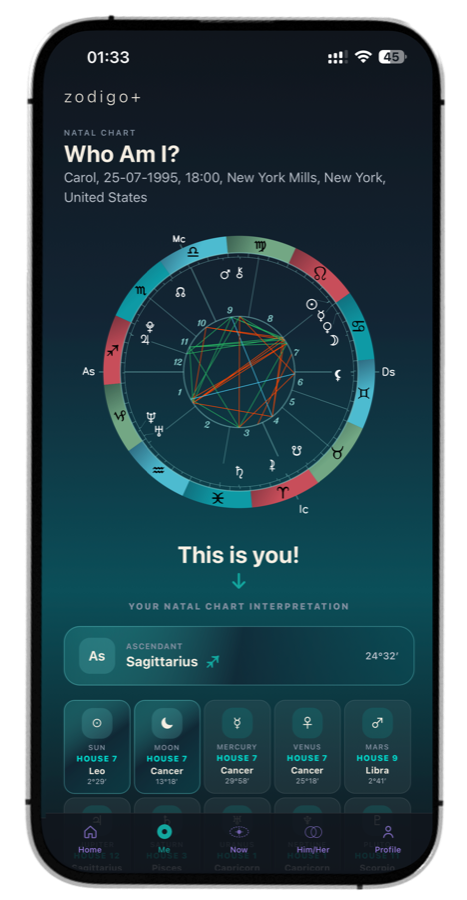
Your personal birth chart
See planets, houses, and aspects calculated from your exact birth details.
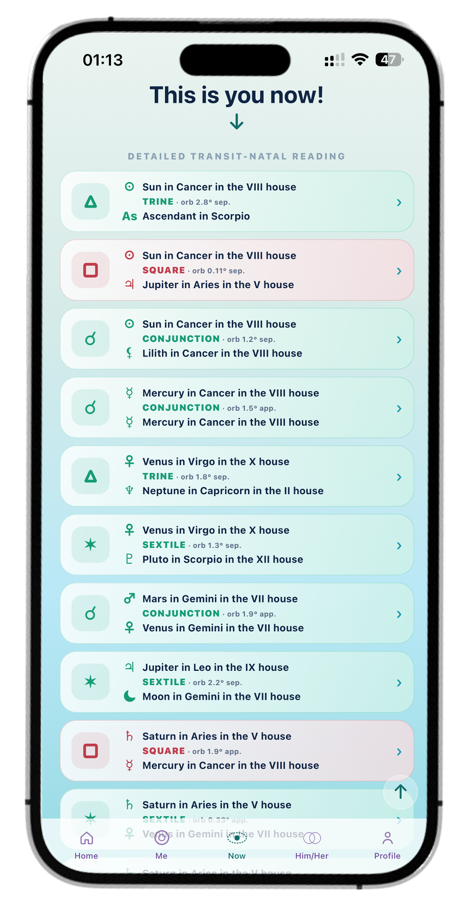
Transits right now
Follow the current sky and see how each transit affects your natal chart and all your personal planets.
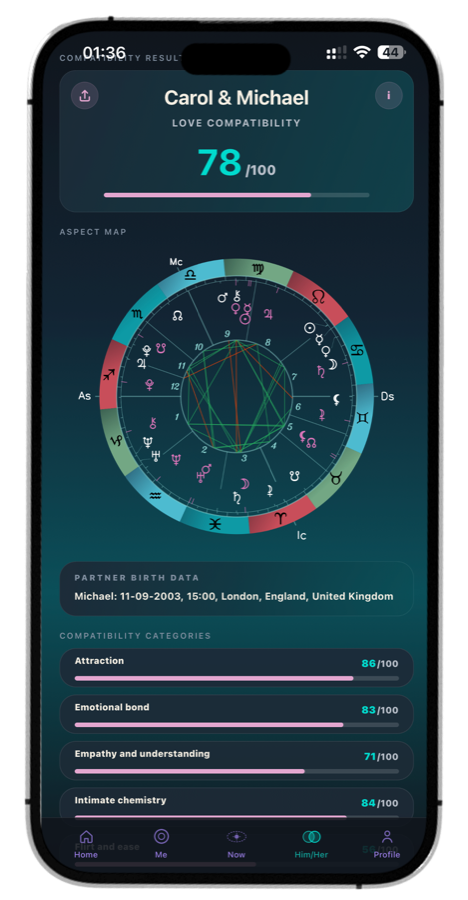
Compatibility
Compare two natal charts and get a detailed synastry reading for love, family, friendship, or work. Explore attraction, emotional closeness, communication styles, points of tension, and long-term relationship dynamics through the aspects between two people's planets.