RELATIONSHIP ASTROLOGY
What Is a Composite Chart?
A composite chart is a relationship chart created from two individual birth charts. Instead of comparing one person’s planets to another person’s planets, the composite chart calculates midpoint positions between them and treats the result as a symbolic chart for the relationship itself. In relationship astrology, it is used to ask what the bond becomes when two people operate as a pair.
COMPOSITE CHART BASICS
Composite charts describe the relationship’s shared identity, emotion and direction.




Composite is the chart of the relationship
If synastry is about how two people affect each other, composite is about the relationship as a shared field. The composite Sun can describe the identity or purpose of the relationship. The composite Moon can describe the emotional baseline. Composite Mercury can describe communication. Composite Venus can describe affection and shared values. Composite Mars can describe drive, conflict and passion.
This does not mean the relationship is literally a person. It means astrology uses a symbolic chart to describe the dynamic that emerges when two charts combine. Many couples recognize composite themes as the mood or direction of the relationship itself.
Composite planets describe shared functions
Composite Sun asks: what is this relationship about? Composite Moon asks: how does this relationship feel day to day? Composite Mercury asks: how do we think and talk together? Composite Venus asks: what do we enjoy and value together? Composite Mars asks: how do we act, desire and fight as a unit? Composite Saturn asks: where do we meet responsibility, limits and commitment?
The houses of these planets show where the relationship expresses itself. Composite Sun in the tenth house may make the relationship visible or goal-oriented. Composite Moon in the fourth may make home and emotional security central. Composite Venus in the eleventh may emphasize friendship, community and shared hopes.
Composite aspects show the relationship’s inner pattern
Aspects in the composite chart describe how the relationship’s shared functions interact. Composite Sun square Saturn may make the relationship serious or burdened by responsibility. Composite Moon trine Venus may make the emotional climate affectionate. Composite Mars square Pluto may create intensity, conflict or powerful shared drive.
As with natal charts, no single aspect decides everything. The whole pattern matters. A composite chart with strong affection and strong pressure may describe a relationship that is loving but demanding. A chart with ease but little Saturn may feel pleasant but less structured.
Composite does not replace synastry
Composite is useful, but it should not erase the two people. A relationship chart can look promising while one person’s natal chart feels heavily triggered by the other. Or synastry can show strong chemistry while the composite chart struggles with direction. Both methods can add value when read clearly.
For beginners, synastry is often easier to understand because it shows direct planet-to-planet contacts. Composite can feel more abstract because it describes the relationship as a whole. Together, they can create a richer picture.
Composite charts need lived context
A composite chart should be read with the actual relationship in mind. A composite tenth-house emphasis may describe a couple that is public, a business partnership, a creative team or a relationship shaped by ambition. The chart gives symbols, but the lived context tells which expression is most relevant.
This is especially important because composite charts can be used for many kinds of bonds. Love, friendship, family and work relationships do not use the same symbols in exactly the same way. The relationship type decides which parts of the composite chart matter most.
Composite timing can also matter
Some astrologers also watch transits to the composite chart. When current planets activate composite Sun, Moon, Venus or Saturn, the relationship itself may enter a noticeable chapter of growth, pressure or change.
How Zodigo keeps compatibility practical
Most people do not need a wall of technical symbols to understand their relationship. They need to know where attraction is strong, where emotional safety exists, how communication works, where tension appears and what supports long-term potential.
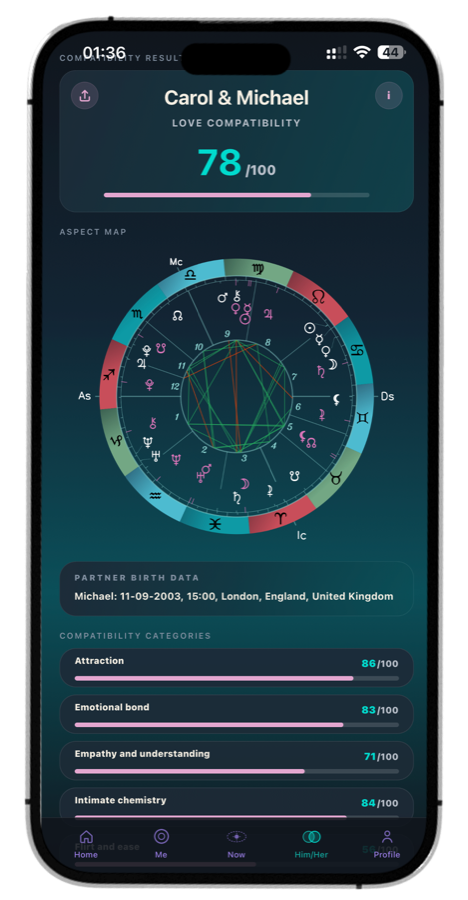
Zodigo makes relationship astrology practical by translating chart comparison into clear compatibility insights. Composite-style thinking can help explain the shared bond, while synastry shows the actual cross-chart contacts that two people feel directly.
Synastry depends on two correctly calculated charts. Zodigo uses a licensed, high-precision planetary calculation engine before comparing planets, houses, aspects and compatibility categories between two people.
FAQ
What Is a Composite Chart? questions
What does a composite chart show?
It shows the relationship as a shared symbolic chart, including its identity, emotional climate and challenges.
How is a composite chart calculated?
It is commonly calculated from midpoints between two people’s planetary positions and chart points.
Is composite better than synastry?
No. It answers a different question. Synastry shows interaction; composite shows the relationship field.
Can composite charts be used for friendships?
Yes. They can be used for any relationship, though the interpretation should match the relationship type.
Inside the Zodigo app
An astrology app powered by high-precision NASA/JPL data
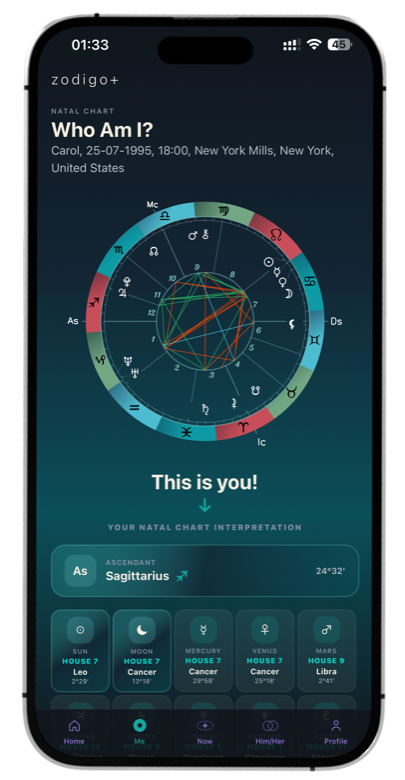
Your personal birth chart
See planets, houses, and aspects calculated from your exact birth details.
Transits right now
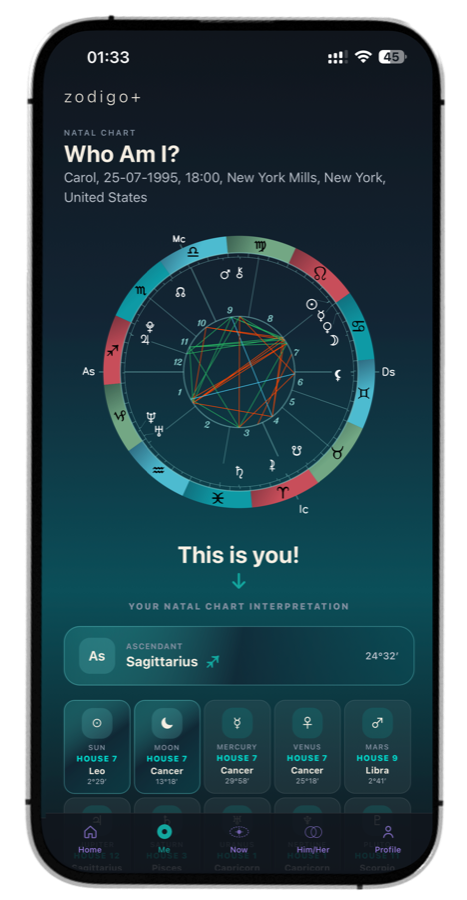
Follow the current sky and see how each transit affects your natal chart and all your personal planets.
Compatibility
Compare two natal charts and get a detailed synastry reading for love, family, friendship, or work. Explore attraction, emotional closeness, communication styles, points of tension, and long-term relationship dynamics through the aspects between two people's planets.