TRANSITS
How Transits Interact With Your Birth Chart
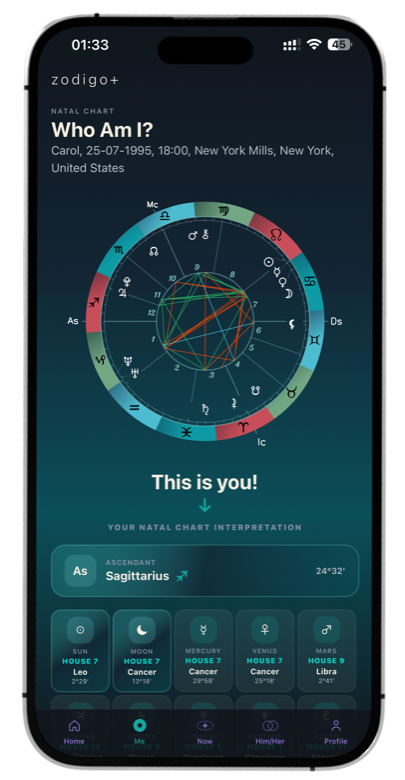
Transits interact with your birth chart by activating the positions you were born with. The planets in the sky keep moving, while your natal planets stay fixed as a symbolic map. When a current planet reaches the same degree, forms an aspect or moves through one of your houses, it temporarily lights up part of your chart. This is why astrology transits are personal only when they are calculated against your birth data.
TRANSIT + NATAL CONTACT
A transit becomes personal when a current planet touches a natal planet or angle.


Natal planets show what is being activated
A transit to your natal Moon usually affects emotional needs, habits, family themes and the body’s sense of safety. A transit to natal Mercury may activate communication, learning, messages or decisions. A transit to Venus may activate love, money, beauty and values. Mars transits can wake desire, anger, effort and courage. Saturn transits can test commitment, responsibility and boundaries.
The natal planet is the receiving point. It tells you which part of your inner system is being stimulated. Without knowing the natal target, a transit reading stays too general. Jupiter in the sky may be expansive, but what it expands depends on what it touches in your chart.
Houses show where life responds
Houses translate a transit into life areas. A transit through the second house may concern money, self-worth or resources. Through the seventh house, it may concern partnership, clients or open conflict. Through the ninth house, it may concern study, belief, travel or long-range vision. The same planet changes expression depending on the house.
This is why birth time matters. The house system depends on the exact time and place of birth. Without it, astrologers can still read transits to planets, but they lose the personal location of the transit inside daily life. Houses make timing more concrete.
Aspects describe the type of pressure or support
A transit conjunction can feel like a beginning, activation or concentration. A square may bring tension and decisions. An opposition may bring relationship mirrors, confrontation or awareness. A trine may bring support. A sextile may bring an opening that needs action. The aspect is the grammar of the transit.
For example, transiting Saturn square natal Moon may ask for emotional boundaries, maturity or family responsibility. Transiting Saturn trine natal Moon may support emotional steadiness and practical care. The same planet and natal point are involved, but the aspect changes the experience.
Angles and chart rulers are especially sensitive
Transits to the Ascendant, Descendant, Midheaven and IC often feel visible because they touch the chart’s main axes. A transit to the Ascendant can affect identity, body and direction. A transit to the Descendant may appear through partnership. A transit to the Midheaven may affect career or public role. A transit to the IC may affect home and roots.
The chart ruler is also important because it represents the planet ruling the Ascendant. When major transits touch the chart ruler, the person may feel the transit more broadly. It can shape direction, energy and the way the whole chart responds.
A transit can wake an old natal pattern
Transits often feel familiar because they activate themes already present in the natal chart. If someone has a natal Venus-Saturn aspect, a Saturn transit to Venus may bring that relationship pattern into sharper focus. If someone has a strong Mars-Uranus signature, a Uranus transit to Mars may awaken the same need for freedom, speed or disruption in a new form.
This is why transits do not create a person from nothing. They activate the chart that is already there. A personal transit reading becomes much more accurate when it understands the natal promise first and then reads the current sky as timing.
Zodigo connects timing to your actual chart
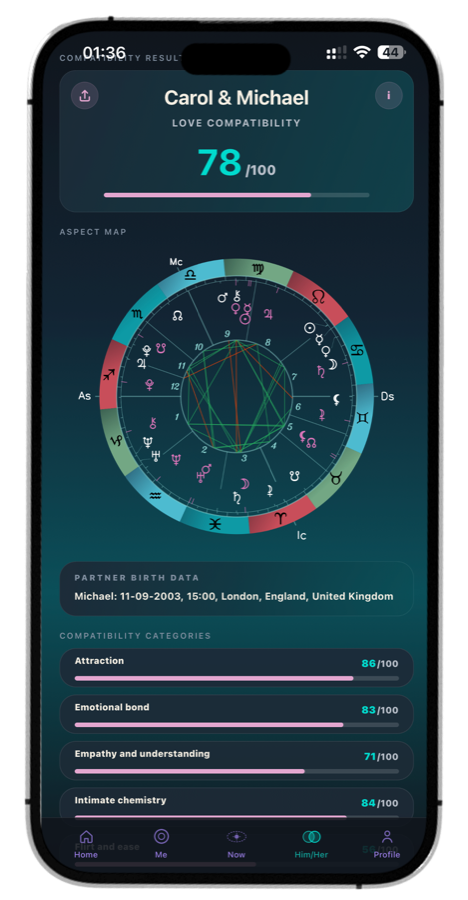
Many transit articles describe the sky in general, but your chart decides what becomes personal. A full transit reading needs planets, houses, aspects, orbs and timing. It also needs to rank which contacts are strongest so you are not overwhelmed by every minor movement.
Zodigo shows how the current sky interacts with your actual birth chart. You can see which natal points are active, which houses are involved and what the transit means in your own timing rather than in a generic horoscope.
For transits, precision matters because the current sky has to be compared with your natal chart. Zodigo uses a licensed, high-precision planetary calculation engine so the timing is based on real planetary positions, not generic sign-based guesses.
FAQ
How Transits Interact With Your Birth Chart questions
Can transits affect everyone differently?
Yes. The same current sky activates different houses and natal planets for different people.
Do I need birth time for transits?
Birth time is very helpful because it gives accurate houses and angles.
Are transits stronger when exact?
Usually yes. Tight or exact transits tend to feel stronger.
What is a natal planet?
A natal planet is a planet’s position in your birth chart at the moment you were born.
Inside the Zodigo app
An astrology app powered by high-precision NASA/JPL data
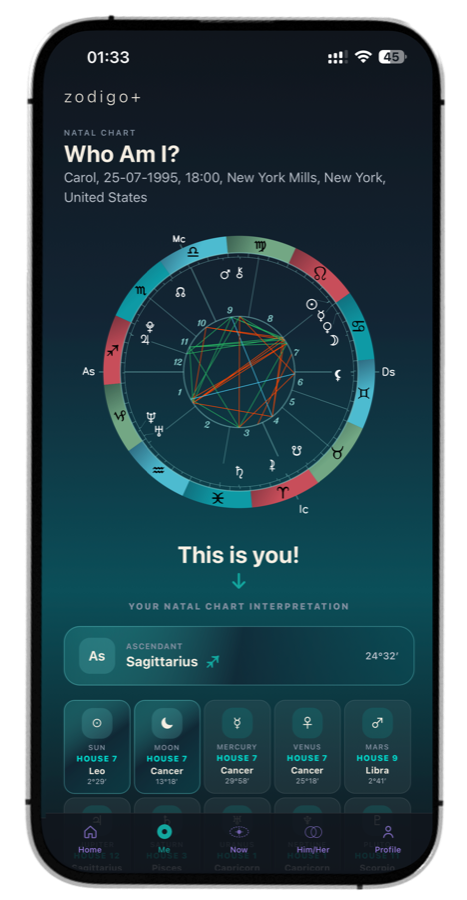
Your personal birth chart
See planets, houses, and aspects calculated from your exact birth details.
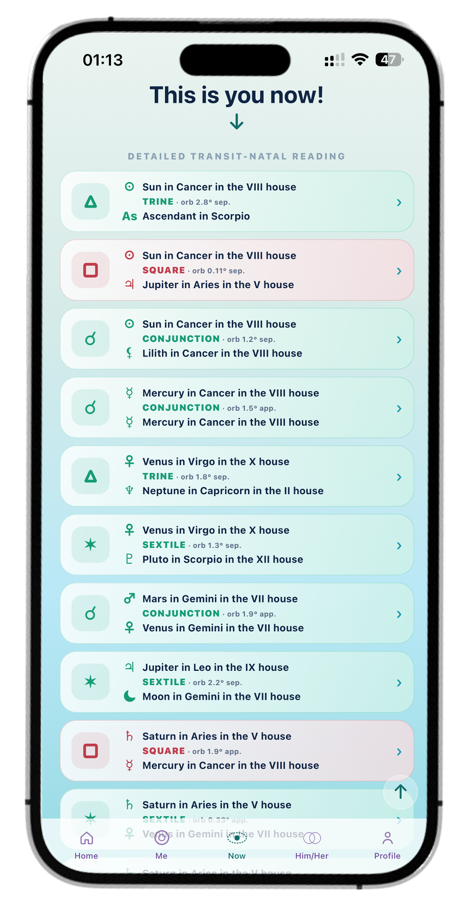
Transits right now
Follow the current sky and see how each transit affects your natal chart and all your personal planets.
Compatibility
Compare two natal charts and get a detailed synastry reading for love, family, friendship, or work. Explore attraction, emotional closeness, communication styles, points of tension, and long-term relationship dynamics through the aspects between two people's planets.