RELATIONSHIP ASTROLOGY
Synastry vs Composite Chart
Synastry and composite charts are two different tools in relationship astrology. Synastry compares two separate birth charts and shows how two people affect each other. A composite chart combines the two charts into one symbolic chart for the relationship itself. Synastry describes interaction. Composite describes the relationship as a shared field, almost like a third chart created by the connection.
TWO RELATIONSHIP TOOLS
Synastry compares two people. Composite describes the relationship as a shared chart.



Synastry shows chemistry between two people
In synastry, one person’s planets form aspects to the other person’s planets. Your Venus may trine their Mars. Their Moon may square your Mercury. Your Saturn may conjunct their Sun. These cross-chart contacts describe attraction, comfort, irritation, commitment, communication and emotional triggers.
Synastry is especially useful when asking how two people experience each other. Who activates whose feelings? Where is the chemistry? Where is the misunderstanding? Where does one person feel supported or pressured by the other? Synastry keeps both individuals visible.
Composite shows the relationship as one chart
A composite chart is usually calculated from the midpoints between two people’s planets and points. It creates a symbolic chart for the relationship itself. The composite Sun can show the relationship’s purpose or identity. Composite Moon can show the emotional climate. Composite Venus can show affection and shared values. Composite Saturn can show the relationship’s tests and structure.
Composite is helpful when asking what the relationship becomes when the two people are together. It does not replace individual charts. It adds a layer that describes the shared entity: the mood, direction, challenges and potential of the bond as a unit.
Use synastry for interaction and composite for the bond
If you want to know why one person triggers another person’s insecurity, synastry is usually clearer. If you want to know the overall emotional climate of the relationship, composite may be clearer. If you want to understand attraction, look at synastry Venus-Mars contacts. If you want to understand the relationship’s shared values, look at composite Venus.
The two methods answer different questions. Synastry asks how you affect each other. Composite asks what the relationship is like as a whole. A strong reading often uses both, but they should not be mixed carelessly.
They can agree or disagree
Sometimes synastry and composite tell a similar story. Strong Moon contacts in synastry may appear alongside a meaningful composite Moon. Strong Saturn contacts may appear alongside composite Saturn themes. Other times, the charts differ. Two people may have exciting synastry but a composite chart that feels unstable or unclear. Or they may have moderate synastry but a composite chart that supports commitment.
When they differ, the interpretation becomes more nuanced. Attraction and relationship structure are not the same thing. Chemistry may be strong without ease. Stability may exist without fireworks. Relationship astrology becomes useful when it can hold these differences.
Beginners should not confuse the two methods
A common mistake is to read a composite aspect as if it were a synastry contact. If composite Venus squares Mars, that describes a shared relationship pattern. If one person’s Venus squares the other person’s Mars, that describes direct attraction and friction between two people. The symbolism may sound similar, but the layer is different.
Keeping the methods separate makes interpretation cleaner. Synastry says “how you affect me and how I affect you.” Composite says “what we become together.” A relationship can make more sense when both questions are answered separately.
Both charts need accurate birth data
Accurate birth data improves both methods. Synastry can use planet contacts without birth time, but houses and angles become much stronger with exact time. Composite charts also become clearer when both charts are calculated well.
Use both when the question is serious
For a quick first look, synastry is usually enough. For a deeper relationship review, both synastry and composite can help separate personal chemistry from the shared relationship pattern.
How Zodigo approaches compatibility
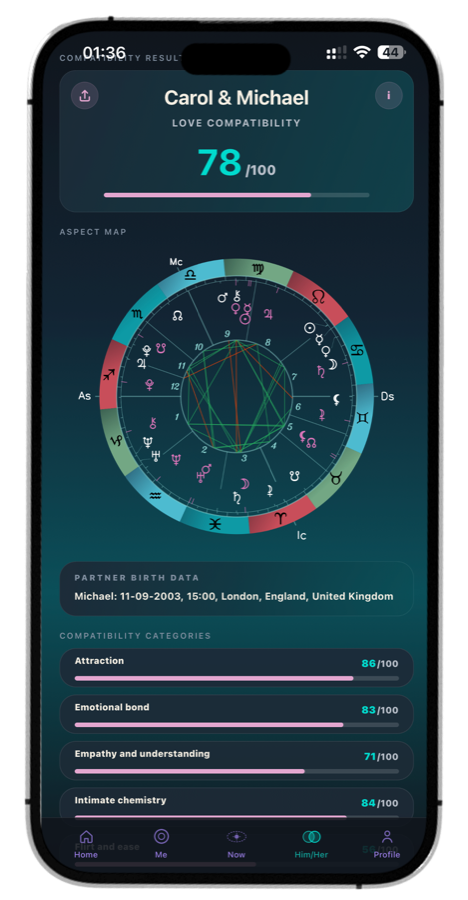
Zodigo currently focuses on personal chart comparison and compatibility insights that are easy to understand. Synastry is the foundation because it shows how one person’s real planets connect with another person’s real planets.
The goal is not to overwhelm people with technical charts. The goal is to explain attraction, emotional bond, communication, trust, tension and long-term potential in a way that feels clear, personal and grounded in accurate birth data.
Synastry depends on two correctly calculated charts. Zodigo uses a licensed, high-precision planetary calculation engine before comparing planets, houses, aspects and compatibility categories between two people.
FAQ
Synastry vs Composite Chart questions
What is the difference between synastry and composite?
Synastry compares two charts. Composite creates one symbolic chart for the relationship itself.
Which is better, synastry or composite?
Neither is always better. Synastry is better for interaction, composite for the relationship as a whole.
Can synastry and composite disagree?
Yes. They may emphasize different layers of the relationship.
Does Zodigo use synastry?
Yes. Zodigo compares two birth charts for compatibility insights.
Inside the Zodigo app
An astrology app powered by high-precision NASA/JPL data
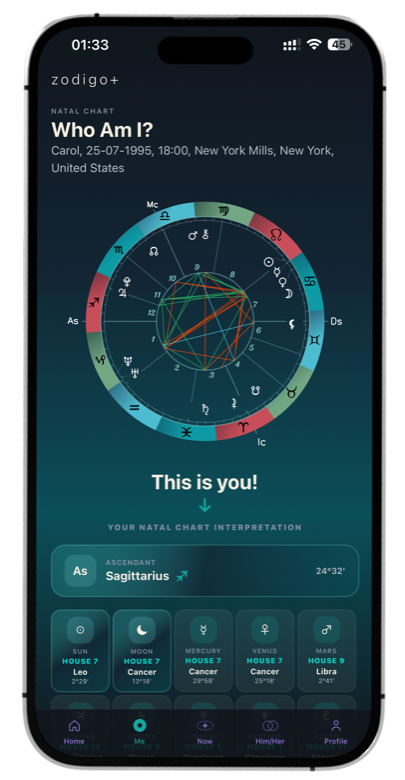
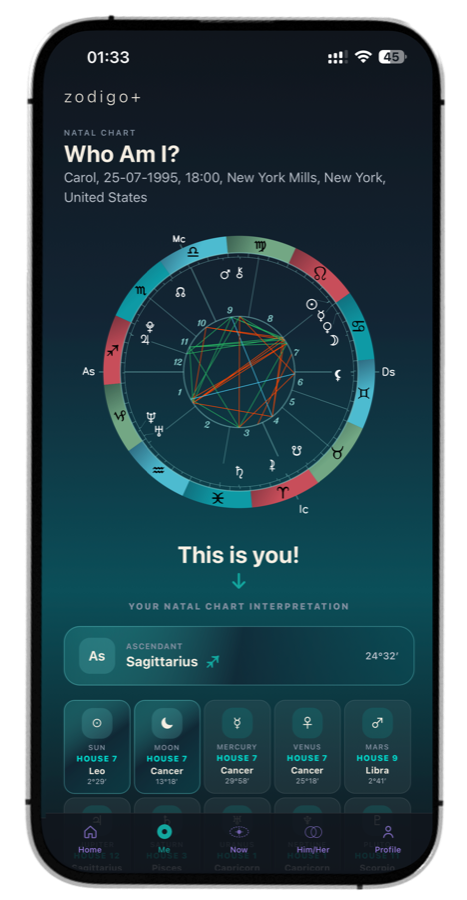
Your personal birth chart
See planets, houses, and aspects calculated from your exact birth details.
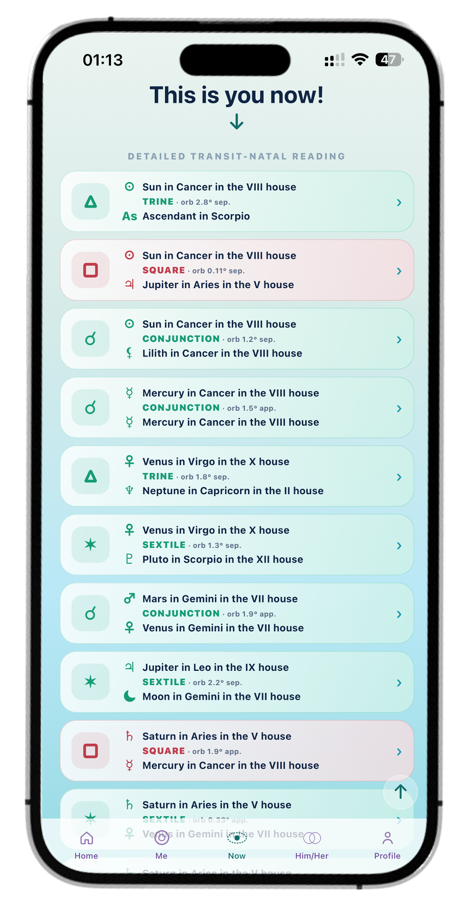
Transits right now
Follow the current sky and see how each transit affects your natal chart and all your personal planets.
Compatibility
Compare two natal charts and get a detailed synastry reading for love, family, friendship, or work. Explore attraction, emotional closeness, communication styles, points of tension, and long-term relationship dynamics through the aspects between two people's planets.