DAILY PLANNING
How to Plan Your Week With Astrological Transits
Weekly astrology planning works best when you look for patterns instead of reacting to every small transit. A week usually contains several layers: the Moon changes signs, Mercury may affect communication, Venus may highlight relationships or money, Mars may affect energy, and slower planets may describe the larger background. Planning with astrology means choosing the right level of detail.
WEEKLY TRANSIT FLOW
Weekly planning combines fast lunar timing with slower planetary themes.


Begin with the big theme of the week
Before checking every daily detail, look for the main transit theme. Is Saturn making a strong contact to your chart? Is Jupiter highlighting growth? Is Pluto bringing deeper pressure? Is Mercury retrograde changing the rhythm of communication? The larger theme gives the week its background.
This helps you avoid overreacting to every minor movement. A Moon transit may describe the mood of one day, but a Saturn transit may describe the responsibility you are carrying all week.
Use the Moon to divide the week
The Moon changes signs every couple of days, so it can help divide the week into emotional chapters. One part of the week may feel more social, another more practical, another more private. The Moon house in your personal chart shows where attention moves.
For planning, this can be simple. Put emotionally demanding conversations on days when you can be present. Place routine tasks where the Moon supports order. Leave space for rest when the Moon activates more private houses.
Track Mercury for communication and scheduling
Mercury is useful for meetings, emails, writing, decisions, learning and logistics. A strong Mercury transit can support planning and conversation, but difficult Mercury aspects may require clearer instructions and more careful timing.
Mercury retrograde weeks require extra patience. That does not mean life stops. It means messages, documents, routes and agreements may need review. Weekly planning can reduce stress by building in time for correction.
Use Venus and Mars for people and energy
Venus can show when relationship, beauty, money, pleasure and agreement become more important. Mars can show when energy, drive, conflict or physical action are emphasized. If Venus is active, a week may be better for connection or negotiation. If Mars is active, it may be better for decisive movement, but also more reactive.
In real planning, this might mean choosing which day to have a sensitive talk, when to ask for support, when to start a task or when to avoid unnecessary arguments.
Do not overload the week with astrology
A common mistake is trying to plan every hour by every transit. That quickly becomes confusing. It is better to choose three to five useful timing notes for the week. What requires patience? What supports focus? What needs communication? What deserves rest?
Astrology should make the week clearer, not busier. If the planning system creates anxiety, simplify it.
Make room for real life
Astrology does not know every deadline, child, job, budget, promise or emergency in your life. Your calendar still matters. Weekly transit planning should work with reality. If a difficult transit falls on an important meeting, the answer may be preparation, not cancellation.
The strongest planning uses both: real obligations and symbolic timing. That combination is practical and grounded.
Put demanding tasks beside supportive timing
Weekly planning can help you match demanding tasks with supportive timing. If Mercury is clear and active, it may be a good moment for writing, calls or planning. If Mars is strong, physical tasks or decisive work may move faster. If Saturn is active, administrative work and commitments may be easier to take seriously.
This does not mean waiting for perfect astrology. It means using the week intelligently. When the timing is tense, you can schedule more buffer. When the timing is flowing, you can use it for work that benefits from momentum.
Plan recovery, not only output
A good weekly astrology plan includes recovery. The Moon may point to days when your emotional system needs more space. Neptune may make boundaries less clear. Saturn may show fatigue from responsibility. If the chart shows pressure, the calendar should not be packed as if nothing is happening.
This is one of the most practical uses of astrology. It helps you see when rest, reflection or slower work is not avoidance, but part of a sustainable rhythm.
Review the week after it ends
The best way to learn weekly transits is to review them. At the end of the week, ask which transit you felt most clearly. Did Mercury describe the communication theme? Did Mars describe energy or conflict? Did Saturn describe a responsibility? Did the Moon match emotional changes?
This creates feedback. You begin to learn how your chart responds to timing, instead of treating astrology as something external that must be believed without observation.
How Zodigo helps you plan the week
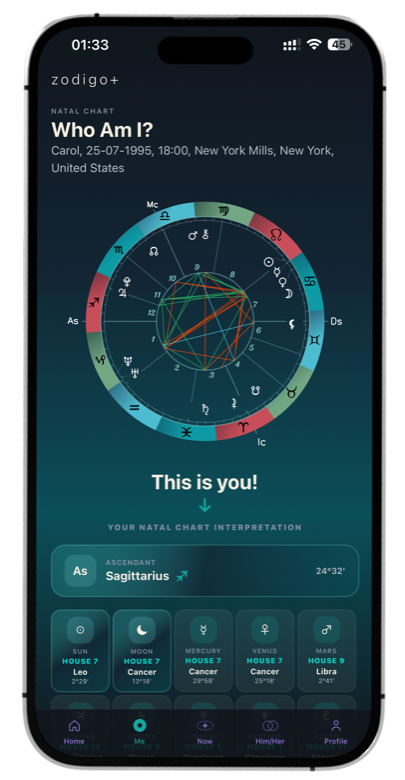
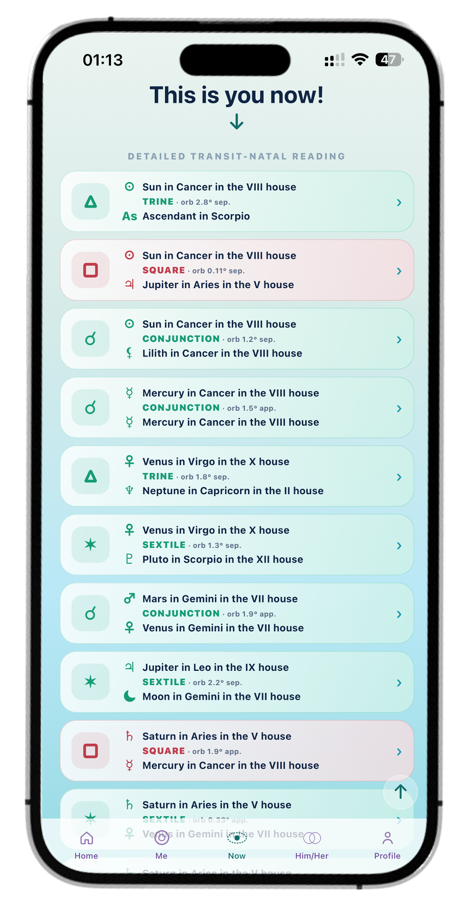
Zodigo can show current transits in relation to your personal chart, so you can see which days carry stronger themes for you. Instead of reading a weekly horoscope for your sign, you can follow the actual planets touching your natal placements.
Zodigo uses a licensed, high-precision planetary calculation engine so current planetary positions can be compared with your birth chart instead of turned into generic sign-based advice.
FAQ
How to Plan Your Week With Astrological Transits questions
Can I plan my whole week with astrology?
You can use astrology as timing context for the week, but it should work together with your real schedule and responsibilities.
Which transits matter most for weekly planning?
Moon transits help with daily rhythm, while Mercury, Venus, Mars, Jupiter, Saturn and outer planets show broader themes depending on your chart.
Should I avoid important tasks during hard transits?
Not automatically. Hard transits may mean preparation, patience and clearer boundaries are needed.
Is a weekly horoscope personal enough?
A weekly horoscope can be useful, but a personal transit reading is more specific because it uses your natal chart.
Inside the Zodigo app
An astrology app powered by high-precision NASA/JPL data
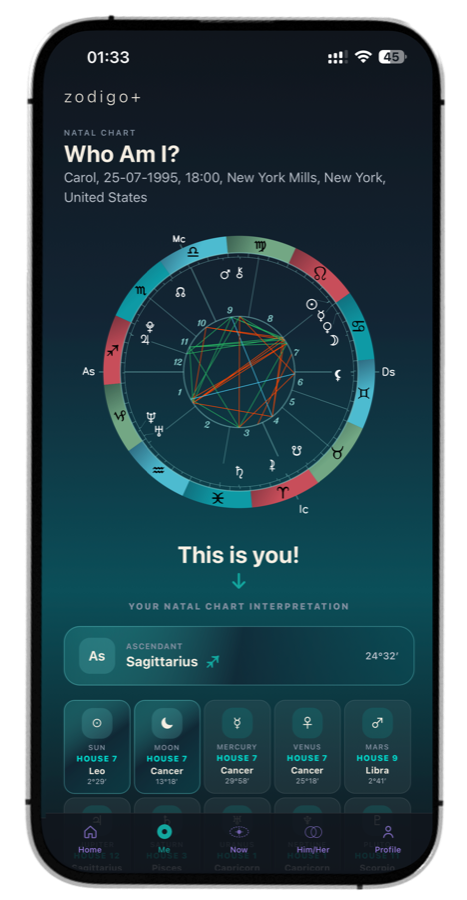
Your personal birth chart
See planets, houses, and aspects calculated from your exact birth details.
Transits right now
Follow the current sky and see how each transit affects your natal chart and all your personal planets.
Compatibility
Compare two natal charts and get a detailed synastry reading for love, family, friendship, or work. Explore attraction, emotional closeness, communication styles, points of tension, and long-term relationship dynamics through the aspects between two people's planets.