RELATIONSHIP ASTROLOGY
Moon Aspects in Synastry
Moon aspects in synastry are some of the most important contacts for emotional compatibility. The Moon describes emotional needs, instincts, memory, comfort and the private self. When one person’s planet aspects another person’s Moon, the relationship touches a sensitive place. These contacts can create deep comfort, emotional recognition, protectiveness, reactivity or vulnerability depending on the planets and aspects involved.
MOON SYNASTRY
Moon contacts show emotional comfort, attachment and daily feeling between two people.


Moon contacts show emotional safety
A strong Moon contact can make two people feel familiar quickly. Moon-Sun aspects may create recognition between identity and emotion. Moon-Venus aspects can feel affectionate, sweet and comforting. Moon-Jupiter aspects may feel generous, protective and encouraging. Moon-Moon aspects can show whether two people share emotional rhythm.
When Moon contacts are supportive, the relationship may feel easy in private life. The people may understand each other’s moods or know how to comfort each other. This does not guarantee compatibility, but it can make daily closeness feel more natural.
Challenging Moon aspects need care
Hard aspects to the Moon can create strong emotional reactions. Moon-Mars contacts may bring passion and protectiveness, but also irritation or quick conflict. Moon-Saturn contacts may bring loyalty and commitment, but also emotional heaviness or fear of rejection. Moon-Pluto contacts can feel deep, intense and transformative, but may stir control or attachment fears.
These aspects are not automatically bad. They show where the relationship touches emotional material that needs maturity. If both people are aware, challenging Moon contacts can deepen trust. If unconscious, they can create repeating hurt.
Moon-Mercury matters for being understood
Moon-Mercury aspects show how feelings and words interact. Supportive contacts can make emotional conversation easier. One person can explain what the other feels, or help name what was vague. Hard contacts may create misunderstandings, where one person speaks logically while the other needs emotional validation.
Communication is often the bridge between Moon patterns and relationship health. If Moon contacts are intense, Mercury contacts can help people talk through them. If Mercury is harsh or dismissive, emotional compatibility may feel weaker even with attraction elsewhere.
Moon house overlays feel personal
When a person’s planets fall in your fourth, eighth or twelfth houses, the Moon-like feeling of privacy, depth or unconscious familiarity may be strong. When someone’s Moon falls in your seventh house, they may feel naturally partner-like. In your fifth house, the Moon may feel playful and affectionate. In your tenth, their emotional presence may connect to public life or responsibility.
House overlays show where emotional contact happens in life. A Moon aspect tells how the planets interact. The house tells where the person feels emotionally present in your world.
Moon compatibility is felt in ordinary life
Moon synastry is often less theatrical than Venus-Mars chemistry, but it can matter more in daily life. It shows how people handle fatigue, stress, food, home, silence, family habits and emotional repair. A relationship can be passionate in public and uncomfortable in private if Moon needs are not respected.
This is why Moon contacts become more important as relationships deepen. Early attraction may depend on Venus and Mars, but living together, caring for each other and building trust often reveal the Moon. Emotional compatibility is not only about feelings; it is about the rhythm of ordinary closeness.
Moon contacts can reveal attachment patterns
The Moon often shows how people seek reassurance. If one person needs softness and the other responds with distance, the chart may show that mismatch. Naming it can help the relationship become more compassionate.
Supportive Moon contacts can feel like emotional fluency. Challenging Moon contacts may ask people to learn a new emotional language rather than assume their own needs are obvious.
Moon work is relationship work
When partners understand each other’s Moon patterns, they often stop taking every emotional difference personally. The chart can help turn reaction into care.
How Zodigo reads emotional compatibility
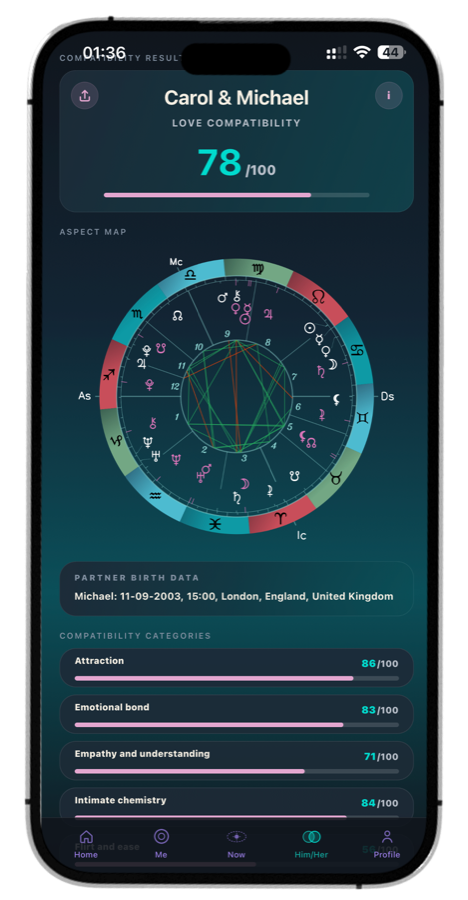
Zodigo uses Moon contacts as part of emotional bond and daily rhythm, not as isolated labels. It can show where two people feel safe, where they may misunderstand each other and where emotional patterns need more care.
This is more useful than asking only whether two Moon signs are compatible. Zodigo looks at the actual chart interaction, including aspects, planets and relationship context.
Synastry depends on two correctly calculated charts. Zodigo uses a licensed, high-precision planetary calculation engine before comparing planets, houses, aspects and compatibility categories between two people.
FAQ
Moon Aspects in Synastry questions
Are Moon aspects important in synastry?
Yes. They often describe emotional safety, attachment and private compatibility.
What is a good Moon synastry aspect?
Moon-Venus, Moon-Jupiter and harmonious Moon-Moon contacts can feel supportive, but context matters.
Are Moon-Saturn aspects bad?
Not always. They can bring loyalty and seriousness, but may also feel heavy or restrictive.
Do Moon aspects matter for friendship?
Yes. They can describe emotional comfort and trust in any close relationship.
Inside the Zodigo app
An astrology app powered by high-precision NASA/JPL data
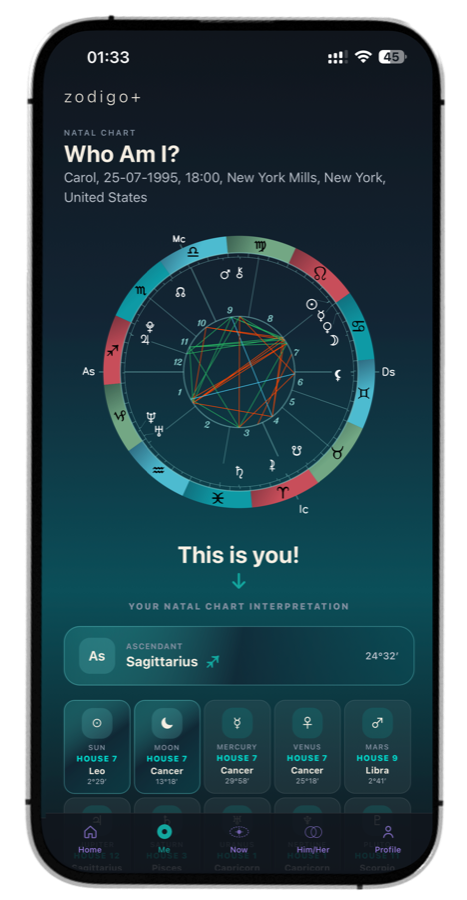
Your personal birth chart
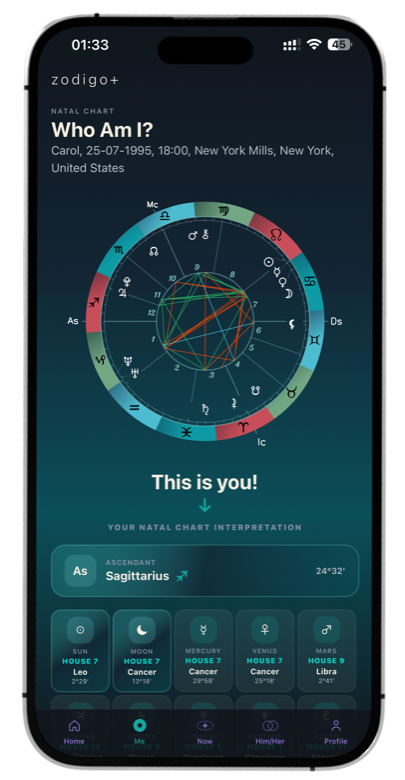
See planets, houses, and aspects calculated from your exact birth details.
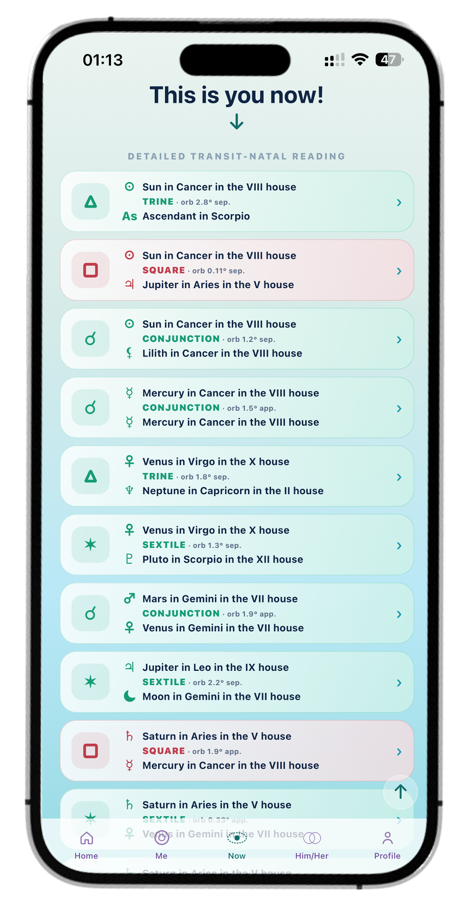
Transits right now
Follow the current sky and see how each transit affects your natal chart and all your personal planets.
Compatibility
Compare two natal charts and get a detailed synastry reading for love, family, friendship, or work. Explore attraction, emotional closeness, communication styles, points of tension, and long-term relationship dynamics through the aspects between two people's planets.