PLANETARY ASPECTS
Hard Aspects vs Soft Aspects
Astrologers often describe aspects as hard or soft. Hard aspects usually include squares and oppositions, and sometimes conjunctions depending on the planets involved. Soft aspects usually include trines and sextiles. This language can be helpful, but it can also be misleading if it turns astrology into good versus bad. Hard aspects create pressure and development. Soft aspects create flow and support. A full chart needs both.
HARD AND SOFT ASPECTS
Squares and oppositions create pressure. Trines and sextiles create flow and opportunity.


Hard aspects create friction and awareness
Hard aspects tend to demand attention. A square can feel like an internal conflict that pushes action. An opposition can feel like a polarity that becomes visible through relationships and choices. A difficult conjunction can feel intense because two planets are fused in one place. These aspects are often where people feel challenged, restless or forced to grow.
But hard does not mean doomed. Many people develop their strongest abilities through hard aspects. A Mercury-Saturn square may start as insecurity around speech or learning, but it can become disciplined thinking. A Mars-Pluto aspect may start as intensity or control, but it can become courage, focus and transformational will.
Soft aspects show flow and available support
Soft aspects often feel easier. Trines show natural flow, talent and familiarity. Sextiles show opportunity and cooperation that can be developed. Moon trine Venus may make affection and emotional warmth easier. Mercury sextile Mars may help direct thinking and decisive speech. These aspects can make certain parts of life feel more accessible.
Soft aspects still need consciousness. A trine can become passive if the person never develops the gift. A sextile can remain unused if the person does not act on the opportunity. Ease is not the same as mastery. The chart shows potential, but the person still has to live it.
Conjunctions are special
A conjunction is not always placed neatly into hard or soft categories. It depends strongly on the planets. Venus conjunct Jupiter may feel generous, affectionate and expansive. Moon conjunct Saturn may feel serious, reserved or emotionally responsible. Mars conjunct Uranus may feel electric and independent. The conjunction intensifies whatever it combines.
For this reason, conjunctions should be read as concentrated energy rather than simply easy or difficult. They can be gifts, burdens, signatures or all three. The sign, house, orb and dignity of the planets help clarify the meaning.
A chart with only ease can still struggle
People sometimes assume a chart with many soft aspects is automatically easier. It may have many talents and smoother internal connections, but it can also lack urgency. If a person is not challenged, they may not develop discipline, resilience or direction. Comfort can become inertia when it is not consciously used.
A chart with many hard aspects may feel intense, but it can produce strength and focus. The person may learn through pressure, but they may also become highly capable. Astrology is more useful when it asks how energy can be lived well, not whether a chart is lucky or unlucky.
The strongest charts often mix both
A chart with meaningful hard aspects and useful soft aspects often has both drive and support. The hard aspects create movement. The soft aspects offer recovery, talent or pathways of cooperation. When a person only hears that squares are bad and trines are good, they miss the real structure. A chart is more like an ecosystem than a scoreboard.
This is also important for compatibility. A relationship with only soft contacts may feel pleasant but not always transformative. A relationship with only hard contacts may feel compelling but exhausting. The most sustainable connections often contain attraction, comfort, challenge and stabilizing contacts together. The quality depends on the whole pattern, not one category.
How Zodigo balances the full pattern
A single aspect label cannot describe a whole person. Hard and soft aspects must be read together with planets, signs, houses and current transits. A difficult aspect can be supported by an easy one. A soft aspect can provide a way through a hard pattern. A chart is a system, not a list of isolated parts.
Zodigo helps you see which aspects are strongest in your own chart and how they work together. Instead of giving one generic interpretation, it shows the personal structure: where pressure lives, where flow exists and how your chart can be understood as one connected map.
Zodigo uses a licensed, high-precision planetary calculation engine to calculate aspect geometry and orbs before turning those patterns into readable interpretations.
FAQ
Hard Aspects vs Soft Aspects questions
Are hard aspects bad?
No. They can feel challenging, but they often create growth, strength and motivation.
Are soft aspects always good?
They are usually supportive, but they can become passive if not used consciously.
Is a conjunction hard or soft?
It depends on the planets involved and the whole chart context.
Do all charts have hard aspects?
Most charts have some tension. The exact pattern depends on the birth data.
Inside the Zodigo app
An astrology app powered by high-precision NASA/JPL data
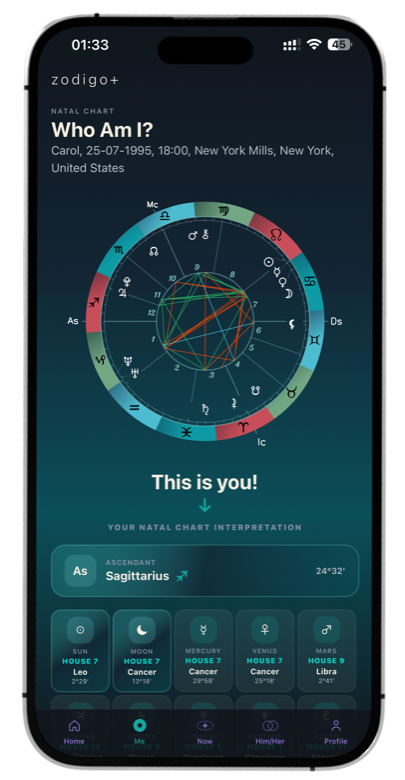
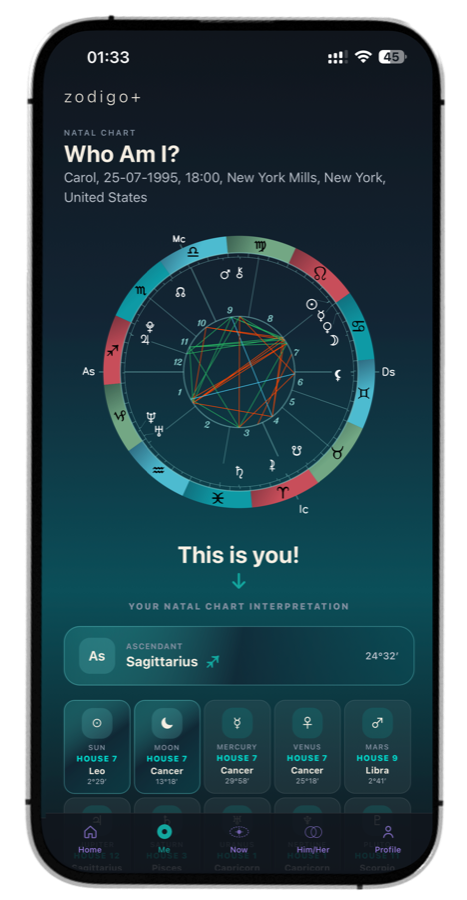
Your personal birth chart
See planets, houses, and aspects calculated from your exact birth details.
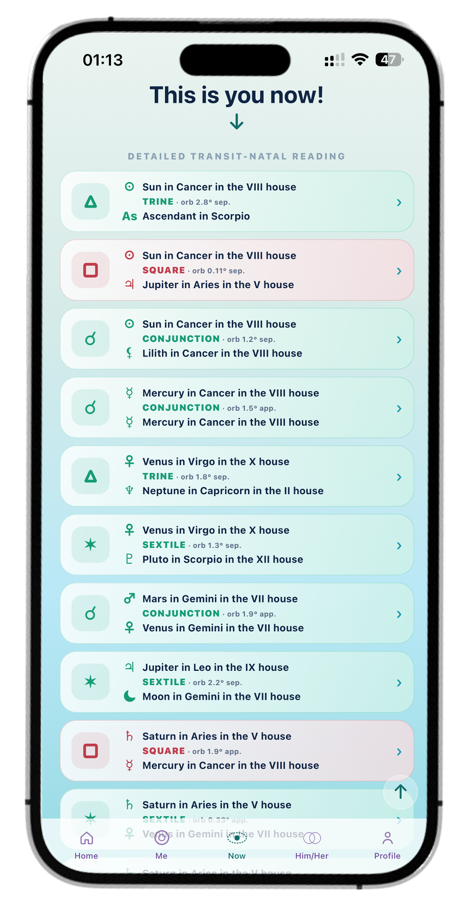
Transits right now
Follow the current sky and see how each transit affects your natal chart and all your personal planets.
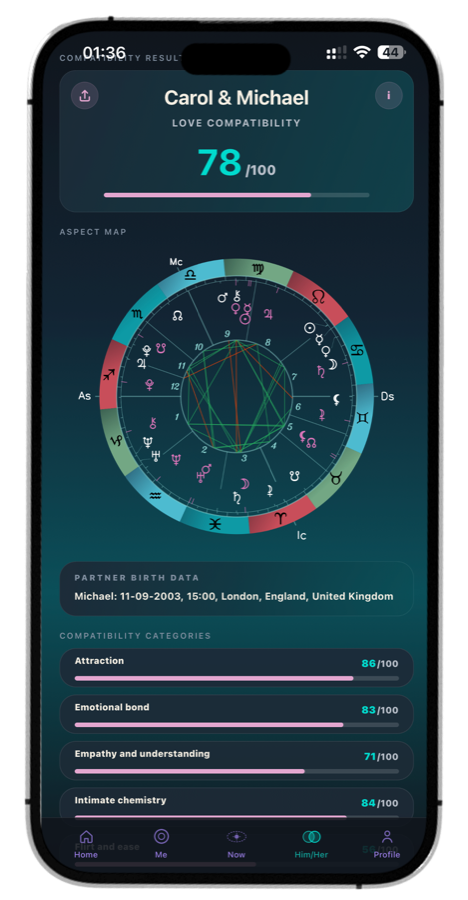
Compatibility
Compare two natal charts and get a detailed synastry reading for love, family, friendship, or work. Explore attraction, emotional closeness, communication styles, points of tension, and long-term relationship dynamics through the aspects between two people's planets.