TRANSITS
How to Read Current Planetary Transits
Current planetary transits show where the planets are now. To read them well, you do not only ask what sign a planet is in today. You compare the current sky with your own natal chart. The meaning comes from the transiting planet, the natal planet or house it touches, the aspect between them and the timing of the contact.
CURRENT SKY
Reading transits means comparing today’s planets with your personal natal chart.

Start with the transiting planet
The transiting planet describes the kind of energy moving through the chart. The Moon changes the emotional atmosphere quickly. Mercury activates thought, messages and decisions. Venus highlights affection, values and pleasure. Mars brings heat, drive and conflict. Jupiter expands possibilities. Saturn tests reality. Uranus disrupts. Neptune softens or confuses. Pluto intensifies.
This first step gives the tone. If Saturn is active, the reading usually asks about limits, responsibility, time and structure. If Jupiter is active, it may ask about growth, confidence, study, travel or excess. If Pluto is active, it may ask what is being transformed below the surface.
Then look at what it touches in your natal chart
A transit becomes personal when it contacts something in your birth chart. Transiting Jupiter conjunct your natal Sun is not the same as transiting Jupiter conjunct your natal Saturn. The first may expand identity, confidence and visibility. The second may expand responsibility, ambition or the need to build something meaningful. The natal planet tells you which part of the chart is being activated.
Angles are also important. Transits to the Ascendant, Descendant, Midheaven or IC can feel highly visible because they touch the structure of identity, relationships, public life and private foundations. A transit through a house can matter even without an exact aspect, but exact contacts usually sharpen the timing.
Read the aspect, not only the planet
The aspect describes how the transit speaks to the natal chart. A conjunction concentrates energy. A square creates pressure and action. An opposition brings polarity, awareness or relationship themes. A trine offers flow and support. A sextile offers opportunity that grows through response. The same planet changes meaning depending on the aspect.
For example, transiting Mars trine natal Mercury may support quick thinking and direct speech. Transiting Mars square natal Mercury may produce impatience, arguments or nervous urgency. The planet is the same, but the geometry changes the experience.
Pay attention to exact dates and repeated passes
Transits have timing. A transit builds as it approaches exactness, peaks around the exact contact and fades as it separates. Fast planets may pass quickly. Slow planets may station, retrograde and cross the same natal degree several times. Those repeated passes often describe a process rather than one day.
A Saturn transit may have an opening contact, a review contact and a finalizing contact. A Jupiter transit may bring several waves of opportunity or expansion. Reading the whole timing window is more useful than treating the exact date as the only moment that matters.
Do not read today’s sky without your chart
A current transit list can tell you where the planets are, but it cannot tell you what they mean for you until it is compared with your natal chart. Someone may read that Venus is in Leo and assume the same romantic theme applies to everyone. But if Venus is moving through your twelfth house, the experience may be private, reflective or hidden. If it is crossing your Descendant, it may be much more relationship-focused.
The same principle applies to every planet. Current astrology becomes useful when it is localized. Your chart gives the houses, natal planets and exact degrees that make the sky personal. Without that comparison, the reading stays close to a general weather report.
For transits, precision matters because the current sky has to be compared with your natal chart. Zodigo uses a licensed, high-precision planetary calculation engine so the timing is based on real planetary positions, not generic sign-based guesses.
Use current transits as reflection, not panic
Current transits are not meant to make you afraid of the sky. They are meant to help you notice timing. A difficult transit can show where maturity is needed. A supportive transit can show where action may be easier. A confusing transit can show where clarity needs patience. The value is practical awareness.
Zodigo organizes active transits against your own chart, so you do not need to guess which current movements matter most. You can see the planets, aspects, houses and timing that are actually relevant to your birth data.
FAQ
How to Read Current Planetary Transits questions
Where can I see current planetary transits?
You can see them in a transit chart or app that compares current planets with your natal chart.
Which transits are most important?
Tight transits from slow planets to personal planets or angles are often important.
Do daily transits matter?
They can describe mood and timing, especially Moon, Mercury, Venus and Mars contacts.
Why do exact dates matter?
Exact dates show when a transit is strongest, though the whole window can be meaningful.
Inside the Zodigo app
An astrology app powered by high-precision NASA/JPL data
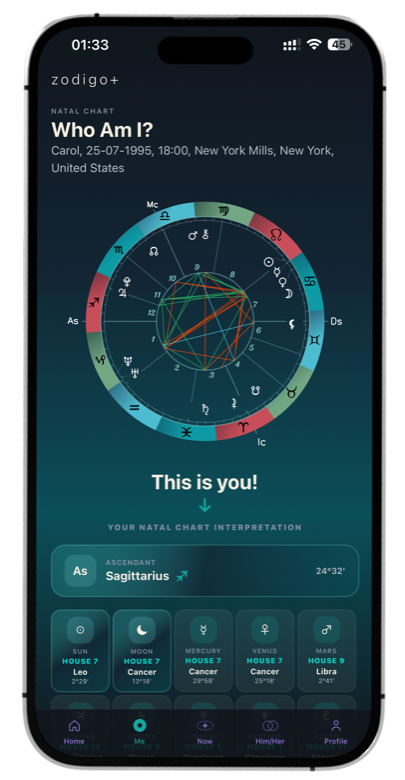
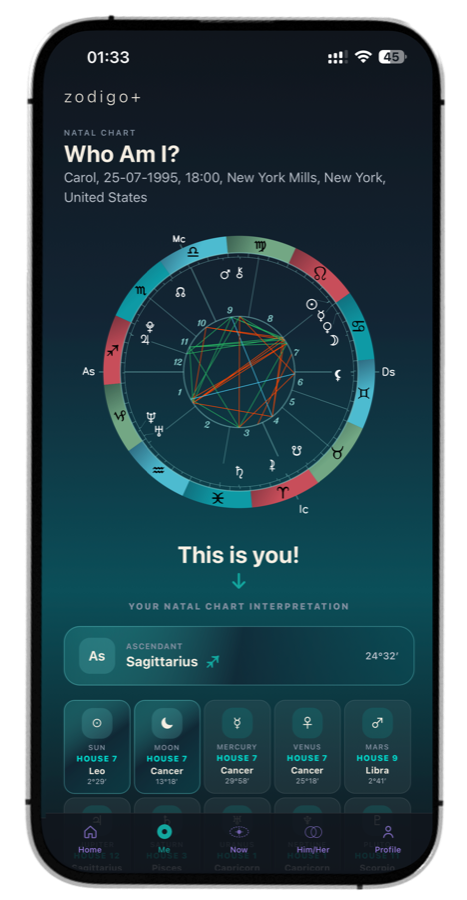
Your personal birth chart
See planets, houses, and aspects calculated from your exact birth details.
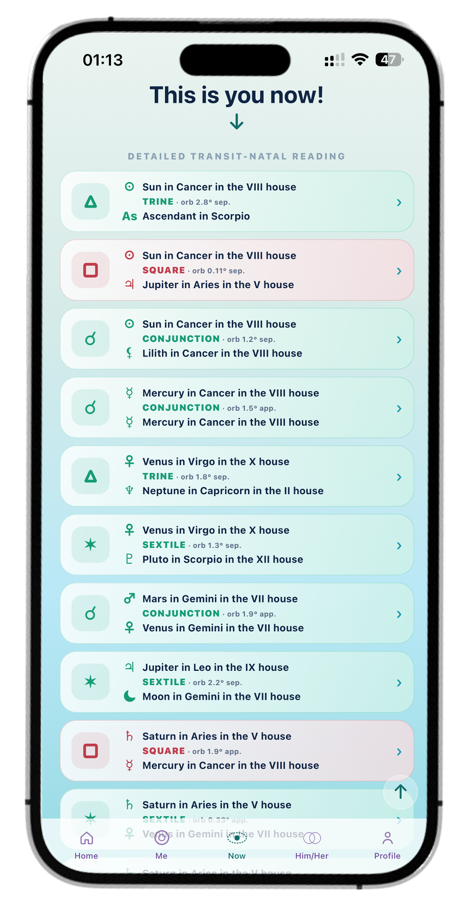
Transits right now
Follow the current sky and see how each transit affects your natal chart and all your personal planets.
Compatibility
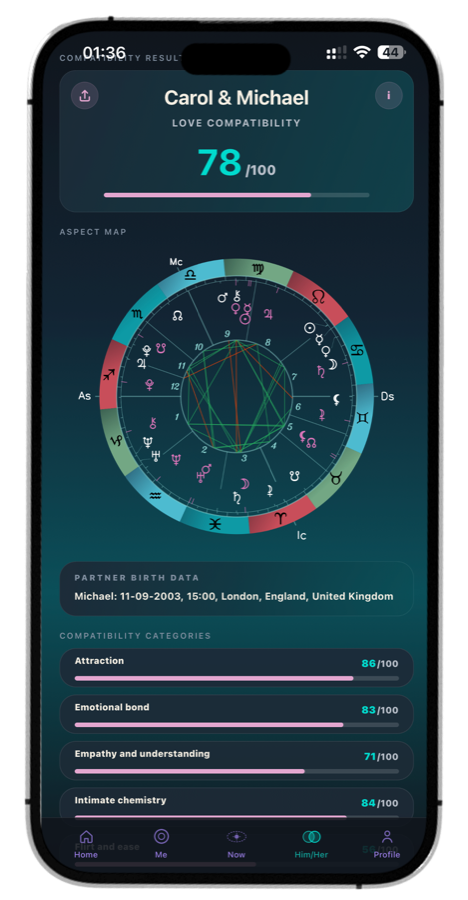
Compare two natal charts and get a detailed synastry reading for love, family, friendship, or work. Explore attraction, emotional closeness, communication styles, points of tension, and long-term relationship dynamics through the aspects between two people's planets.